
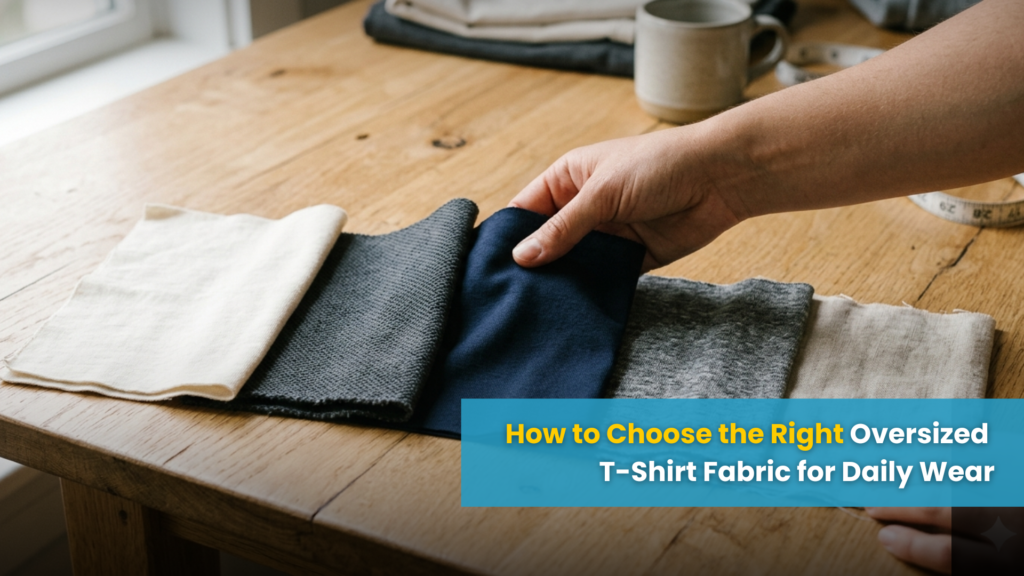
A lot of people choose oversized T-shirts by looking at the print, colour, fit, or price first. And honestly, that is normal, because those are the things you notice immediately. But once you actually start wearing the T-shirt in real life, the fabric is what decides whether it becomes your daily favourite or just another tee that looked good at first but did not feel right after a few wears.
This matters even more with oversized T-shirts because the fabric does not just touch the body. It shapes the whole silhouette. It decides how the T-shirt falls from the shoulders, how the sleeves sit, how breathable it feels, and whether the relaxed fit looks intentional or slightly messy.
So if you are wondering how to choose oversized t-shirt fabric, the answer is not only about picking the softest material. The better answer is to choose a fabric that feels comfortable, holds the oversized shape well, works for your weather, and still feels good enough for repeat daily wear.
At Door74, we look at fabric as one of the biggest reasons an oversized tee either becomes a repeat-wear piece or stays unused after one or two wears. Because at the end of the day, a T-shirt is not only about how it looks on the product page. It is about how it feels when you actually live in it.
The Short Answer: The Right Fabric Should Feel Comfortable, Hold Shape, and Work for Repeat Wear
The right oversized T-shirt fabric should balance three things together: comfort, structure, and daily wearability. If the fabric is comfortable but too weak, the oversized fit may lose shape. If the fabric is structured but too heavy, it may not feel easy for regular use. And if the fabric looks good but does not feel breathable, it may not become the kind of T-shirt you keep reaching for.
A good daily-wear oversized tee should usually feel:
- comfortable enough to wear for hours, not just for a few minutes
- breathable enough for regular Indian weather and movement
- structured enough to support the oversized silhouette
- easy enough to pair with jeans, joggers, cargos, or shorts
- reliable enough to feel useful after repeated wear
That is the real balance. The best fabric is not always the thickest fabric, and it is not always the softest fabric either. It is the one that matches how you actually wear your T-shirts.
Why Fabric Matters More in Oversized T-Shirts Than People Think
In a regular-fit T-shirt, weak fabric may not always be immediately obvious because the T-shirt sits closer to the body. But in an oversized T-shirt, there is more fabric, more fall, and more visible movement. So the fabric behaviour becomes much more noticeable.
If the fabric is too limp, the oversized tee can look tired very quickly. If it is too stiff, it may lose the relaxed feel that makes oversized T-shirts so comfortable in the first place. If it is too thin, the shape may not hold well. If it is too heavy, it may feel less practical for long daily wear.
This is why the fabric has to support the silhouette. It should help the T-shirt fall properly from the shoulders, sit well through the sleeves, and maintain a shape that feels relaxed but not careless.
Our approach at Door74 is simple: oversized fabric should feel easy on the body, but it should still support the shape of the T-shirt. That is what makes an oversized tee look more intentional instead of just loose.
Cotton, Blends, Jersey, and Heavyweight Fabrics: What Should You Know?
When people talk about the best fabric for oversized t-shirts, cotton is usually one of the first fabrics that comes up, and for good reason. But it is not the only thing worth understanding. Different fabrics behave differently, and the right choice depends on whether you want comfort, structure, breathability, or a stronger streetwear feel.
Cotton
Cotton is one of the most common choices for everyday T-shirts because it usually feels natural, breathable, and comfortable on the skin. For daily wear, a cotton oversized t-shirt for daily wear can make sense when you want something easy, familiar, and comfortable enough to repeat often.
Cotton also works well when the goal is not only style, but long-hour comfort. It can feel especially useful for casual outings, college wear, travel, and everyday dressing because it usually gives that simple, wearable T-shirt feel people expect.
But even with cotton, quality and construction matter. Not every cotton T-shirt feels the same. The fabric weight, knit, finishing, and stitching can all change how the final T-shirt behaves.
Cotton blends
Cotton blends can be useful when you want the comfort of cotton with some added performance from other fibres. Depending on the blend, the T-shirt may feel smoother, stretch slightly better, wrinkle less, or hold shape differently.
The important thing is not to assume every blend is automatically better or worse. Some blends can work very well for daily wear, while others may not feel as breathable or natural as you want. The final experience depends on the actual fabric quality and how the T-shirt is made.
Jersey knit
Jersey is commonly used in T-shirts because it feels soft, flexible, and comfortable. It works nicely for casual wear because it moves easily with the body. In oversized T-shirts, jersey can feel very relaxed, but it should still have enough strength to hold the shape.
If jersey fabric is too weak or too thin, the oversized fit may start looking flat or stretched out. But when it has the right feel, it can be very easy to wear regularly.
Heavyweight fabrics
Heavyweight fabrics can give oversized T-shirts a stronger shape. They often make the silhouette look more structured and streetwear-led. This can be great if you want the T-shirt to have more presence.
But heavyweight fabric is not automatically better for everyone. In warmer weather or long daily use, some people may find it less comfortable. So the decision depends on where you are wearing it, how long you will wear it, and whether you prefer a heavier fall or a lighter daily feel.
What Is GSM in Oversized T-Shirts, and Should You Care?
GSM stands for grams per square meter. It is a standard fabric measurement used to describe fabric weight. In simple words, GSM helps indicate how heavy or thick a fabric is, but it does not automatically tell you whether a T-shirt is good or bad.
This is important because many people hear GSM and immediately assume higher means better. That is not always true. A higher GSM fabric may feel heavier and more structured, but it may not always be the most comfortable choice for hot weather or long daily wear. A lower GSM fabric may feel lighter and easier, but if it is too light, it may not hold the oversized shape well.
So when we talk about oversized t-shirt fabric GSM, it should be understood as a standard measurement for fabric weight, not a direct quality score.
A simple way to understand GSM:
- Lighter GSM fabrics usually feel easier and more breathable, but they may not always give a strong structured fall.
- Mid-weight fabrics often work well for daily wear because they can balance comfort and shape.
- Heavier GSM fabrics can give a stronger oversized silhouette, but they may feel warmer or less easy for all-day Indian weather.
The right GSM depends on how you plan to wear the T-shirt. For daily wear, the goal is not to chase the highest number. The goal is to find the fabric weight that feels comfortable, holds shape, and suits your routine.
The Daily Wear Fabric Test: 5 Questions to Ask Before Buying an Oversized T-Shirt
This is the section that makes fabric selection much easier. Instead of trying to remember too many fabric names or technical terms, ask these five simple questions before buying.
1. Will this fabric feel comfortable after a few hours?
A T-shirt should not only feel good when you first touch it. It should feel comfortable after hours of actual wear. Think about how you will use it: college, office-from-home, casual outings, errands, travel, or everyday movement.
If the fabric feels irritating, too heavy, or too stiff, it may not become a daily-wear piece.
2. Will it hold the oversized shape?
An oversized tee needs some shape. If the fabric collapses too much, the T-shirt can start looking weak or untidy. The right fabric should support the shoulder fall, sleeve shape, and overall body width.
The goal is relaxed, not lifeless.
3. Will it feel breathable enough for your routine?
For Indian daily wear, breathability matters a lot. If you are mostly outdoors, commuting, or wearing the T-shirt for long hours, the fabric should not feel suffocating.
This is where breathable t-shirts for men and women become more practical than just trend-led pieces. Comfort should work beyond the first impression.
4. Will it survive repeat washing without quickly losing appeal?
No fabric stays new forever, but daily-wear T-shirts should not lose their appeal too quickly. The fabric should feel reliable enough for repeated wear and washing, especially if you plan to use the tee often.
This does not mean expecting unrealistic durability from every product. It simply means judging whether the fabric feels like it can stay useful in your regular wardrobe.
5. Will it work with the way you actually dress every week?
This is something people often forget. The best fabric is not only technically good. It should also match your real outfits. If you mostly wear jeans, joggers, cargos, or shorts, the T-shirt fabric should support those looks naturally.
A tee that feels good but does not match your wardrobe will not get repeated often. And daily wear is all about repeat value.
Best Fabric Depends on How You Actually Wear Your Oversized T-Shirts
There is no one perfect fabric for everyone. The right choice depends on your routine, weather, comfort preference, and styling style.
If you want the best t-shirts for daily wear, think less about one universal answer and more about your actual use case.
For everyday casual wear
Comfort and repeatability matter most. You want a fabric that feels easy, does not irritate the skin, and can be worn again without feeling too delicate or too heavy.
This is where cotton or comfortable cotton-led fabrics often make sense.
For streetwear styling
A little structure can help. Oversized streetwear usually looks better when the T-shirt holds its silhouette properly. If the fabric is too thin or too weak, the outfit may lose its edge.
Here, fabric fall matters as much as the print or colour.
For summer and warm weather
Breathability becomes more important. A heavy tee may look strong, but it may not feel ideal for long wear in heat. Lighter or more breathable fabrics can feel easier, depending on the exact construction.
For travel or long days
The fabric should stay comfortable over time. You want something that does not feel annoying after a few hours and still looks presentable when worn casually.
This is why daily-wear fabric is not only about fashion. It is about real comfort.
What People Usually Get Wrong When Judging T-Shirt Fabric
A lot of fabric mistakes happen because buyers judge only one thing. They judge thickness, softness, print, or price, but they do not look at the full wearing experience.
Here are common mistakes to avoid:
- Assuming heavier fabric automatically means better quality.
- Choosing only by print or colour and ignoring how the fabric will feel.
- Confusing first-touch softness with long-term comfort.
- Ignoring whether the fabric supports the oversized silhouette.
- Thinking all cotton fabrics or all blends behave exactly the same.
- Forgetting that the same fabric can feel different depending on fit and construction.
This is why fabric selection should never be done in isolation. You have to think about fabric, fit, and daily use together.
How Fabric Changes the Look of an Oversized T-Shirt Outfit
Fabric does not only change comfort. It also changes the look of the outfit.
A softer fabric can make an oversized tee feel more relaxed and easy. A more structured fabric can make it feel more streetwear-led and visually stronger. A very thin fabric may feel light, but it can also look less shaped if it does not hold the oversized silhouette well. A heavier fabric may look cleaner and stronger, but it may not be everyone’s first choice for warm-weather daily wear.
That is why two oversized T-shirts can look completely different even if the fit seems similar. The fabric decides how the tee falls, how it moves, and how it holds the outfit together.
For example, a black oversized tee in weak fabric may look flat after a while. A similar black oversized tee in better fabric may look cleaner and more intentional with the same jeans or cargos. The colour is the same. The fit may be similar. But the fabric changes the whole result.
What We at Door74 Think Matters Most in Daily-Wear Oversized T-Shirt Fabric
For us at Door74, the right fabric is the one that makes an oversized tee easy to wear repeatedly, not just attractive in a product photo.
That means the fabric should feel comfortable, support the silhouette, and work in real daily situations. It should help the T-shirt feel relaxed without making it look careless. It should also be easy enough to style across men’s and women’s wardrobes, because daily-wear clothing should not need too much effort to make sense.
Our approach at Door74 is not to treat fabric as a technical detail hidden behind the product. It is part of the wearing experience. It affects how the tee feels, how it falls, how often you reach for it, and whether it becomes a genuine everyday piece.
That is why we think fabric, fit, and fall should always be judged together.
Final Thoughts: Choose Fabric Based on Real Daily Wear, Not Just First Impression
Choosing the right oversized T-shirt fabric is not about chasing the thickest material, the softest touch, or the highest GSM number. It is about understanding what will actually work for your routine.
A good oversized tee should feel comfortable, breathable, and easy to wear. It should hold its shape well enough to make the silhouette look intentional. It should also match the way you already dress, because that is what turns a T-shirt from a one-time purchase into a repeat-wear piece.
So before choosing your next oversized tee, look beyond the print and price. Look at the fabric, the fit, the fall, and how the T-shirt will feel after real use. That is the same way we at Door74 think about our oversized styles for everyday wear.
FAQs
1. What is the best fabric for oversized T-shirts?
There is no single best fabric for everyone. Cotton, cotton blends, jersey, and heavier fabrics can all work depending on comfort, breathability, structure, and use case.
2. Is cotton good for oversized T-shirts?
Yes, cotton is often a comfortable choice for oversized T-shirts, especially when breathability and daily wear matter.
3. What does GSM mean in T-shirts?
GSM means grams per square meter. It is a standard measurement used to describe fabric weight, not a direct quality score.
4. Are heavyweight oversized T-shirts better?
They can hold shape better and give a stronger silhouette, but they may not be ideal for everyone’s daily comfort, especially in warmer weather.
5. What fabric is best for daily-wear T-shirts?
A good daily-wear fabric should feel comfortable, breathable, and reliable enough for repeat use while still supporting the T-shirt’s shape.
6. How do I know if an oversized T-shirt fabric is good?
Use the daily wear test. Ask whether it feels comfortable for hours, holds shape, breathes well, handles repeat use, and works with your real wardrobe.
Also Read: Why Oversized T-Shirts Became a Streetwear Essential?